b12 labs at SLAS 2026
We just got back from SLAS 2026 in Boston, and it was one of the most energizing weeks since we started the company.
Why SLAS
SLAS brings together the people who actually build and run lab automation: scientists, engineers, and the vendors who make the hardware. It was the right room for us to present our thesis: the bottleneck in lab automation, today, is not the hardware, but the software controlling and the systems built around them.
Every conversation confirmed what we’ve been hearing since day one: teams have Chemspeed stations, liquid handlers, and plate readers that cost hundreds of thousands of dollars, but instead of accelerating, in some cases automation becomes an end in itself, and scientists end up stuck learning bespoke coding languages, writing brittle scripts, or trying to fit their workflows to hard-coded standard flows.
What we showcased
We brought three tools to the table:
Automation Copilot
Our highlight: Describe what you want to do in natural language, and our Copilot translates it into a machine-executable workflow for your instrument stack. No specialized programming, no fragile hand-offs. We showed live demos converting natural language goals into Chemspeed-ready protocols.
Plate Designer
Researchers describe their optimization goal: ‘optimize yield for this reaction, to be executed on mg scale’. Our plate designer figures out what the relevant variables are: ligand, solvent, base, and then figure out, for your specific transformation, what the optimal choices are, based on the user’s internal data, the literature, and our own internal data.
With some customers and partners, we have already shown up to 99% yield on the first plate. In contrast with other approaches like BO, our agent identifies optimal conditions in one shot, based solely on the knowledge of your reaction.
Synthesis Expert
Our agentic retrosynthesis tool. Chemists describe a target molecule and get back reviewable pathway options with clear reasoning for each step. Massive interest here: this approach resonated a lot with expert chemists in how they think and approach chemical problems. You can use it even without automation, but it also crucially operates as a brain for the automated synthesis lab.
What we learned
A few themes came up repeatedly:
People want to start small. Nobody wants a platform overhaul. They want to solve one painful workflow, prove the value, and expand from there. That matches our rollout model perfectly.
Trust is earned in the review step. Scientists don’t want a black box. They want to see the protocol, understand why it was designed that way, and be able to adjust before execution. Our agent-guided review loop resonated strongly.
The “no coding required” message lands immediately. We heard some version of “I’ve been waiting for this” more times than we can count.
The team at SLAS
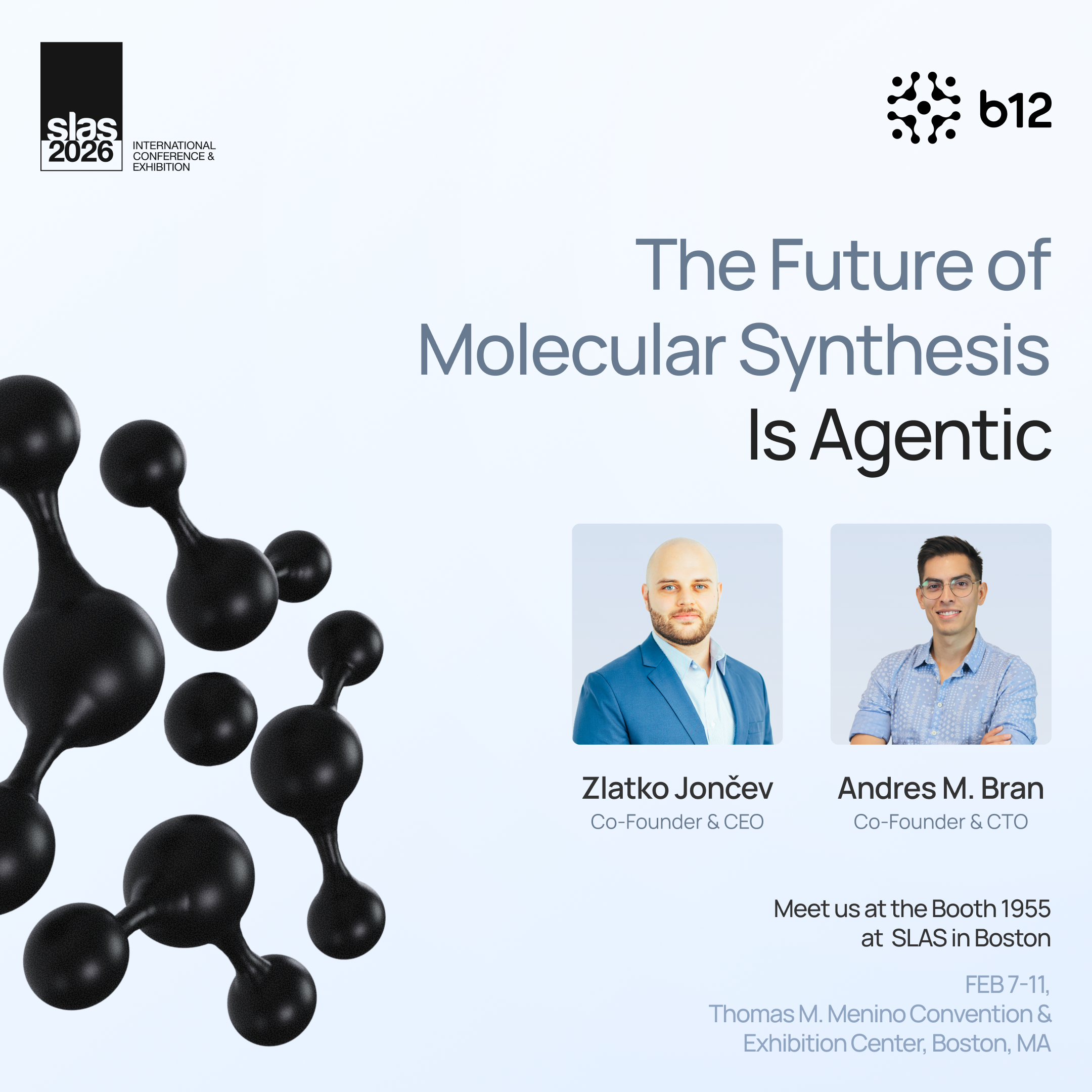
Zlatko Jončev (Co-Founder & CEO) and Andres M. Bran (Co-Founder & CTO) were both on the floor all week. If we spoke and you’re reading this: thank you. If we missed each other, don’t hesitate to reach out!
What’s next
We’re following up with everyone who asked for a demo. If we connected at the conference reach out. We’d love to show you what we’re building.
You can also check out our SLAS landing page for a deeper look at the tools we showcased, or follow us on LinkedIn for updates.